Monday, 22 February 2016

BFI notes

Types of Cinemas

Arthouse cinema- Small independent cinemas 

Multiplex- Blockbuster and mainstream entertainment 

Crossover- nominations and award related films (prestige) 

Uses and Gratifications for national audience?

Information/Education: How do other British people live? What are issues affecting the UK? – People who are prestige and have authority

Social Interaction: ‘Crowd pleasers’ (social viewing), Oscar nominations (conversation point)

Personal Identification: National pride, solidarity, aspiration, glamorisation, reinforcing/rejecting values

Pure Entertainment: spectacle, escapism, adrenaline, (thriller/horror), catharsis (+emotional intensity)

Uses and Gratifications for US/international audience?

Information/Education: historical/literary figures, contemporary celebrities/royalty

Social Interaction: ‘Crowd pleasers’ (social viewing), Oscar nominations (conversation point)

Personal Identification: solidarity with subcultures/marginalised groups rarely represented in mainstream cinema

Pure entertainment: spectacle, escapism, adrenaline (thriller/horror), catharsis (+emotional intensity)

Film Examples

‘Franchise’: Kingsman: The Secret Service – Mix of arthouse, mainstream and prestige

A UK audience would like the entertainment and elite it has throughout the movie.

A US/international audience would like the patriotic representation and the adrenaline rush, thestereotypical shots, the violence, social realism and the plot.

'Heritage': A Royal Night Out – is nostalgic ‘rose tinted’  - prestige

Heritage focuses on: UK film used tourist marketing strategy (for foreign audiences)
Relationship with the past is not questioned or criticised.

A UK audience would like the history and meritocracy which is presented.

A US/international audience would like the information and knowledge provided the class difference as it is only presented in the UK which will reinforce the dominant stereotype and also the knowing and interests in the monarch.

‘Social Realism’: The Selfish Giant
: an arthouse film
Social realism focuses on: Working or 'underclass' characters, Dark side of human behaviour, Seen to be the opposite of heritage cinema, Challenges audiences comfort zones- harsh reality of modern Britain 
A UK audience would like how an alternative stereotype of a teenager lives in the UK, the relation with the theme, the emotional intensity provided.
A US/international audience would like how social class is presented and how lower/working class children live and work.
Horror: The Woman in Blackmultiplex/arthouse

Horror focuses on: The offered costume dramas, tradition of gothic theme and the US horror had stricter censorship towards this genre of film (preferred family films) 

A UK audience would like Daniel Radcliff as protagonist as he is well known from the Harry Potter franchise which is successful globally, it is based and set in England, and it follows inspiration from a British book/novel, a traditional British feel for horror, and links to Edwardian period based clothing

A US/international audience would like how it is a popular novel and stage performance 

'Urban Fairy-tale' Rom-Com: One Day
an arthouse film
Rom-Com:

  • Romantic Comedy 
  • Typical love story (based)
  • Set in contemporary London - Lots of tourist landmarks; Middle class neighbourhoods 
  • Vision of urban life
What would a UK audience like about this film?
  • Location/setting 
  • British landmarks 
What would a US/International audience like about this film?

  • Sexual reference/theme
  • Comedy
  • Couple drama


Sunday, 21 February 2016

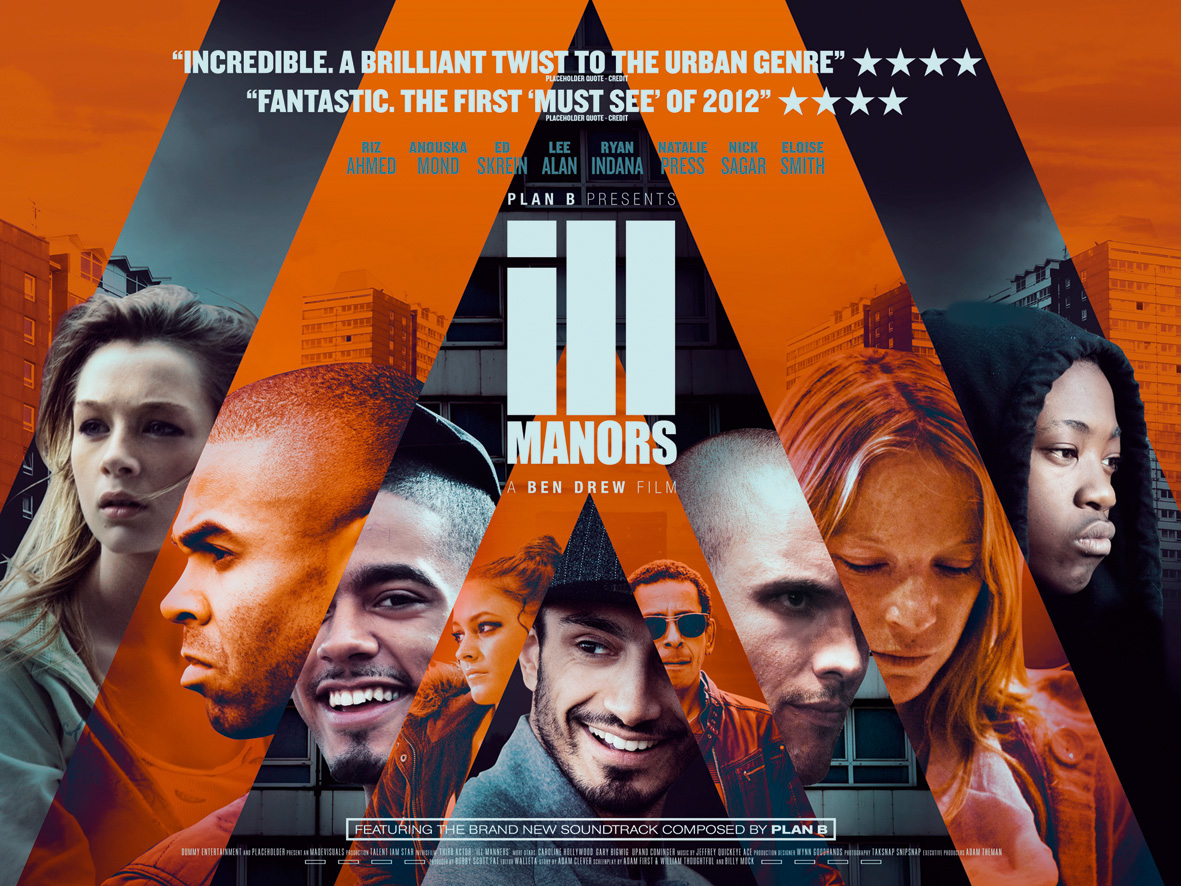
Ill Manors print: branding


1. What are the key conventions that help you identify the print text (e.g. title, central image, review quotes etc.)?
Key Conventions:
  • Title of Film
  • Central Image/s
  • Director Credits
  • Names of Main Characters
  • Reviews & Star Ratings
  • Directors Block/Credits
2. What design features help identify the Ill Manors brand?

The logo helps us identify the ill manors brand as the logo is wildly used on other forms of advertisement.The use of Plan B and Ben Drew would also help notify the brand image of ill Manors, as he is the main person behind the film, and would create a sense of familiarisation between the audience. 

3. What examples of synergy can you find with the broadcast platform or other print examples?

There is synergy between the billboard and the broadcast trailer of the film, as the ill Manors logo is used which is emphasised and is presented throughout the trailer as well as the print advertisements.


1. What are the key conventions that help you identify the print text (e.g. title, central image, review quotes etc.)?
Key Conventions:
  • Title of Film
  • Slogan/ Catchphrase
  • Director Credits
  • Release Date
  • Age Rating
  • Central Image
  • Social Media

2. What design features help identify the Ill Manors brand?
The ratings and reviews by many film organisations and media companies would help in creating a brand image for ill Manors. Due to the film being low-budget, positive reviews exactly what the film needs to boost its advertisement and views of the film.

3. What examples of synergy can you find with the broadcast platform or other print examples?
There is synergy between the film poster and the film trailer. They both follow a similar path in terms of the information they both display, and the tone and feel of both are of very similar compared to other forms of print media.


1. What are the 
key conventions that help you identify the print text (e.g. title, central image, review quotes etc.)?

Key Conventions:
  • Title of Film
  • Slogan/ Catchphrase
  • Director Credits
  • Release Date
  • Age Rating
  • Central Image
  • Social Media

2. What design features help identify the Ill Manors brand?
Again, the logo stands out centre image, which audiences will recognise instantly. The consistent use of the same font style and size creates a sense of power towards the youth within the way the poster is signified to the audience., the use of the slogan 'we are all products of our environment' is used in the trailer too, which builds up the films brand image. 


3. What examples of synergy can you find with the broadcast platform or other print examples?
There is synergy between the DVD Extras and this movie poster, as both convey the films slogan in a manner which is considered significant to the audience.


Ill Manors: Print platform


Image result for mens health logo


1) Identify the target audience (demographics/psychographics) for this magazine. How is that particular audience attracted?

The target audience is mostly male, aged 20-50. The fact they are focusing on Ben Drews weight loss makes the audience interested as thats what the main demographic look for when reading this magazine. In terms of psychographics, this would appeal to aspirers as the magazine focuses on keeping an good body shape. 

2) Does the article do more than just entertain? How? (Think of Uses and Gratifications theory) What audience pleasures does the article offer?

The magazine article both informs and entertains the reader as it gives us an insight into a celebrity's lifestyle. It performs some kind of escapism for the reader through the words of Plan B.


3) What codes/conventions of print interviews can you find in the article? 

The article has a image of Plan B in a medium shot, the background and him are shown in even balance. This is the typical shot type that is used in most magazines, and I think that it is emphasising Plan B's dramatic weight loss that he refers to in the article. 

4) How is narrative used to tell a story in each interview? Clue: what is it that keeps the reader interested in the article to the very end?
Plan B's personal experience keeps the reader interested and how it is split into small sections so that it is easy for reader to enjoy without getting bored.
5) What synergy can you find between this text and the broadcast examples we have studied so far?

There is synergy between this interview and the Radio Interview with Fearne Cotton, they both focus on Plan B as a person and his life rather than the music and his film career


1) Identify the target audience (demographics/psychographics) for this magazine. How is that particular audience attracted?


The core demographic would be the young adult market, aged between 15-30. I think in terms of psychographics, the magazine would appeal to explorers as the magazine focuses on individualism.


2) Does the article do more than just entertain? How? (Think of Uses and Gratifications theory) What audience pleasures does the article offer?

Yes, this article creates a personal relationship between the audience as he mentions his past as a child living in the suburbs of Britain, which will appeal to the younger demographic and therefore encourage them to then go watch the film.


3) What codes/conventions of print interviews can you find in the article? 
The two  contradicting images of Plan B could cause some controversy. This is because he is pictured with a cigarette and hoodie in one, which is stereotypically a negative image of the youth, and then suited and booted in the next. This could show the younger audience that change is possible.

4) How is narrative used to tell a story in each interview? Clue: what is it that keeps the reader interested in the article to the very end?
Again, I think the fact that Plan B talks about his childhood etc makes the reader more intrigued therefore they carry on reading as his childhood is very interesting. He also talks about his political views and also links what he is saying to the movie, which therefore encourages the readers to go watch the movie.
5) What synergy can you find between this text and the broadcast examples we have studied so far?

There is this cross promotion between the music and the film for ill Manors and the fact that he is being featured in a music magazine which therefore makes readers interested in his music.


Image result for guardian logo


1) Identify the target audience (demographics/psychographics) for this magazine. How is that particular audience attracted?
The newspaper is a left wing broadsheet newspaper, therefore would focus on socialist ideologies rather than conservative. It would appeal to both males and females, at a 60/40 male to female percentage, it would range from 16-40 year old readers who are in ABC1 clerical groups. It would also appeal to reformers and succeeders as they would be ones who want to seek control and aspire to reach high goals.

2) Does the article do more than just entertain? How? (Think of Uses and Gratifications theory) What audience pleasures does the article offer?
 I think the article does entertain, but it also creates a topic of conversation among readers. This is because this article looks more at Plan B's history and his youth.The article also educates the audience through it explains the life of Plan B to the audience in a series of shorthand techniques.

3) What codes/conventions of print interviews can you find in the article? 
 A medium close up of Plan B is used which I would say is quite typical of these types of articles. This interview is set out like an article with embedded quotes, set out similarly to the Men's Health magazine. Throughout this interview we get a rough idea of what Plan B's childhood was like. 

4) How is narrative used to tell a story in each interview? Clue: what is it that keeps the reader interested in the article to the very end?
The narrative starts right from the beginning of Plan B's life, it explains his school-life and how it was growing up in a dysfunctional family but also the narrative of some of his characters in the film. The use of two narratives in one article makes it more interesting for the reader.

5) What synergy can you find between this text and the broadcast examples we have studied so far?
There is synergy between this and the DVD Extras, as they both focus on the younger characters and they portray struggle and pain through the labelling of the youth.


1) Identify the target audience (demographics/psychographics) for this magazine. How is that particular audience attracted?
The Daily Mail is a right wing newspaper which therefore targets a much more conservative audience, predominately from a middle class background. 

2) Does the article do more than just entertain? How? (Think of Uses and Gratifications theory) What audience pleasures does the article offer?

I think it is to entertain the reader but in a negative way as it mocks the film and Plan B's work so it is used to entertain the conservative reader.

3) What codes/conventions of print interviews can you find in the article? 
The use of derogatory language to describe both the film and the characters in the film is typical of a negative news article. 

4) How is narrative used to tell a story in each interview? Clue: what is it that keeps the reader interested in the article to the very end?
Due to it being aimed at a conservative audience, the reader would be interested in the mockery of the film.
5) What synergy can you find between this text and the broadcast examples we have studied so far?

Due to the article being a negative review of the film, it will result to people not going to watch the film. However, the trailer is linked at the end of the article, which almost promotes the film as it allows the reader to make their own interpretation of the film and then can decide whether they want to go watch the film or not.


Sunday, 7 February 2016

Ill Manors: Broadcast platform concluded

1) What does this tell us about Plan B's intentions in making the film?

Plan B's intentions in making the film is to offer some kind of explanation about the youth culture today and to inform people the reasons behind their behaviour/actions. He also mentioned that he wants to challenge misunderstandings of the youth. 


2) What do we learn about the production process for Ill Manors?


Plan B originally made a short film that was based on a similar narrative structure to ill manors and was told to cut it down to only 5 pages, which sparked the idea of him making it like a music video with him rapping and essentially him telling the story. This later on inspired him to make ill manors using the same key concepts, such as him rapping acting like the narrator of the film. To create realism Plan B chose real life youths who had come from a troubled background. 
3) What can you tell about the possible target audience from this short documentary?


The film was not only for the core target audience, which was youths aged 15-25, but for people that weren't really educated or aware of gang/youth culture. Because the film was made during the London riots, the film provided an insight in why these youths were behaving in such a way to the rest of the general population.
4) Does the film successfully do what director Ben Drew (Plan B) set out to achieve? Explain your answer with reference to both the film and the 'making of' documentary.


The cinematographer said that the film aims to show there is 'hope in a hopeless situation', he wants them to feel blown away and make the audience come out of the cinema thinking about these people and hopefully wanting to make a change.

1) What is SBTV? Research the channel and explain how it became successful. Identify the target audience for this interview (demographics/psychographics) and say why.
SBTV Global Ltd, also known as SB.TV or SmokeyBarz, is a multi-faceted company run by a small team of young people who work on web-based viral content at different music-based events. The media platform has its origins and roots in urban music.  It is a privately help company, founded on the 2nd November 2006. The channel is targeted at the youth demographic and therefore the use of the explicit language will appeal to the audience as they will understand and want to watch it.


2) What is the audience appeal for an interview like this? How does the opening of the clip emphasise this appeal?

The opening of the clip appeals to the teenage audience through the colloquial language used. The use of the swearing means that the youth of our generation can feel like they are in a normal environment, and nothing is artificial. This can allow them to build a relationship with these celebrities

3) How is Plan B (the brand) represented in this text?

Someone that is very dedicated and passionate about this film. However there is other side to him that swears and jokes around which can remind the audience that he is just like us, the youth culture, which promotes realism.

1) What is the history of the Jonathan Ross show? What channels has it appeared on? Why has Jonathan Ross been a controversial media figure in the past?
The Jonathan Ross show airs on ITV, on prime time television. It has been a controversial media figure in the past due to the incident with Russell Brand and the prank call, which lead them both being suspended from the BBC.


2) Identify the target audience for this interview (demographics/psychographics) and say why.
I would say this programme will appeal to mainstreamers at it shows on prime time tv. People between the ages of 35-45 may be more likely to watch this, as there is adult humour and older celebrities on the show. However for this interview in particular, I think that the audience would of broadened to a much younger demographic. 

3) What is the audience appeal for a programme like the Jonathan Ross show?

For a show like Jonathan Ross, the audience appeal is totally different to that of SBTV. This is because the audience that are more likely to be interested in his show are the older generation and are interested in adult humour etc. 

4) How is Plan B (the brand) represented in this text?

Ross states: 'Most interesting artist around', which conveys importance of Plan B. Likewise, the listing of the qualities Plan B has: rapper, songwriter, actor and director shows how qualified and experienced he is.

1) How popular is BBC Radio 1? 

Find average listening figures for the station. How has the BBC Radio 1 audience declined over recent years? Why might this have happened?
BBC 1 Radio isn't really popular in terms of other media sources, such as tv. The average listening figures for this station are 53,502(2014). BBC 1 radio has declined over the years as there has been an increase in their competitor market as more people have started to listen to music on-line or through social media. This is one of the reasons as to why it may have decreased.

2) Who is the target audience for BBC Radio 1?

BBC Radio 1 is a British radio station operated by the British Broadcasting Corporation which also broadcasts internationally, specialising in modern and current popular music and chart hits throughout the day. Radio 1 provides alternative genres after 7:00 pm, including electronic dance, hip hop, rock, indie or interviews. It is aimed primarily at the 15–29 age group.


3) How does Plan B promote Ill Manors in this interview?

Plan B promotes it through the consistent mentioning of the film itself. He mentions that he had to complete shots of phones and mini sim chips. This was attempted to target his audience in the movie. He also mentioned the faith he has in his actors, as they were all unknown but he believed he would be able to turn them into successful and well established artists. Likewise, he says he owes the crew a lot as they worked extremely hard and done this for 'peanuts'. We comprehend that some of the main song from the 'Ill Manors' track was actually taken from the beat of a German song. Plan B got in contact with the German label company, and managed to be allowed to use the backing beat.  


4) What representation of Plan B can we find in this interview?

The representation of Plan B that we can find in this interview is that he is a very dedicated young man, however that he is also very last minute. We are told that he was the mastermind behind the music, directing and editing. It consisted of creativity and patience, but he told us it was all worth the stress, as it was a successful film at the end of it all. As a director, Plan B learnt that he will not leave things to the last minute, and that he has high hopes for his